
Focus and Scope
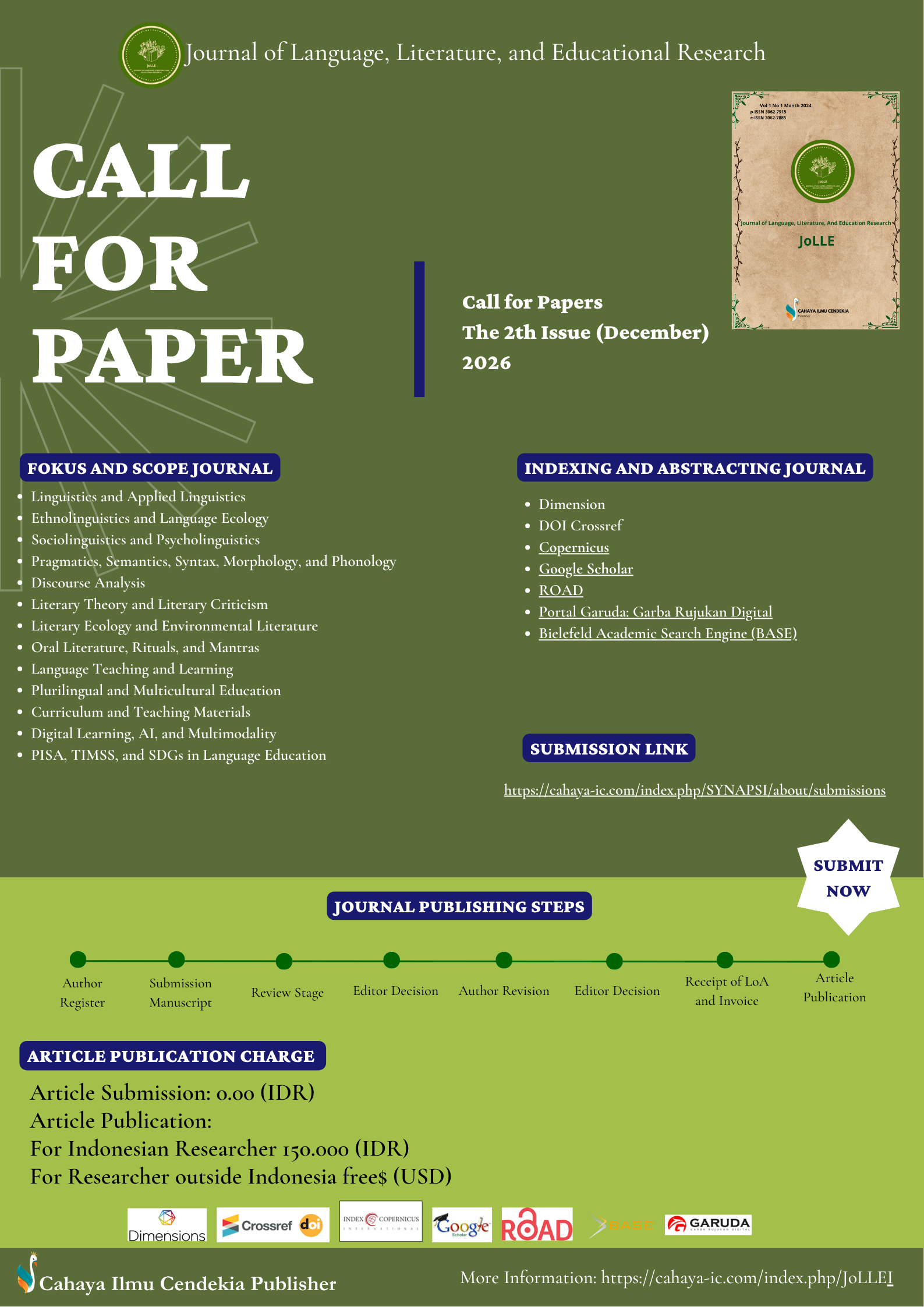
Journal of Language, Literature, and Educational Research is a scientific journal that focuses on the development of science in three main areas, namely language and linguistics, literature, and language education and international surveys in the field of language (PISA, TIIMS, SDGs). This journal is a forum for research that highlights the dynamics of language, the development of literature, and innovations in language pedagogy in social, cultural, and educational contexts.
First, in the field of language and linguistics, this journal covers research on multilingualism, language policy and use, and linguistic rights in society. Accepted linguistic studies include sociolinguistics, ecolinguistics, ethnolinguistics, pragmatics, semantics, phonology, morphology, syntax, psycholinguistics, and discourse. This focus also includes studies on language ecology, which examines the relationship between language, the social environment, and the sustainability of language amidst cultural dynamics.
Second, in the literary realm, this journal accepts scholarly works related to literature, literary theory, literary criticism, and studies of literary ecology. The scope of literary ecology includes ethnomedicine literature, which studies healing texts and narratives in cultural traditions, and eco-literature, which examines representations of nature, ecology, and environmental crises in literary works. Furthermore, this journal opens up space for ethnolinguistic and religiosity studies that investigate the meaning of language in mantras, rituals, symbols, and community spiritual practices.
Third, in the field of language education, this journal accommodates research on plurilingual didactics, first, second, and foreign language teaching methods, curriculum design, and teaching materials development. This focus also includes studies on learning evaluation and the use of digital technology, artificial intelligence, and multimodality in the language learning process. Research contributions in this area are expected to enrich pedagogical innovation and address the challenges of language education in the era of technological development and globalization.
Main Focus Areas:
LINGUISTICS
Ethnolinguistics, Language Ecology, and Linguistic Rights. Examining language as a social, cultural, and ecological practice that lives in society.
Ethnolinguistics and Language Ecology
- The relationship between language and culture, identity, and local knowledge systems
- The dynamics of language ecology: language contact, language shift, language extinction, and language revitalization, as well as archaic languages.
- The relationship between language and the social and natural environment from an ecolinguistic perspective
- Language structure as a reflection of an ethnolinguistic worldview
Linguistic Rights and Language Justice
- Linguistic rights of indigenous peoples and linguistic minorities
- Linguistic justice in the context of law, education, and public policy.
- Forensic linguistics and language use in the legal realm.
- Relations of power, ideology, and language in social life
Theoretical and Applied Linguistic Studies
-Sociolinguistics, psycholinguistics, pragmatics, semantics, syntax, morphology, and phonology
-Discourse analysis in social, digital, educational, and ethnolinguistic contexts
- Study of language in media, public spaces, and cultural practices.
LITERATURE
Literary ecology, religiosity, and cultural symbolism. Examining literature as a medium for representing human relations, language, culture, sorituality, and the environment.
Oral Literature: Ritual Literature, Mantras, Prayers, and Symbols
-The study of language in mantras, prayers, incantations, and ritual texts
- Symbolic language in religious ceremonies, oral traditions, and spiritual performances
- Religious literature as a constructor of identity, cosmology, and sacred values
-An ethnolinguistic approach to ritual symbolism and communication
Literary Ecology and Environmental Literature
- Literary studies with an ecocritical and environmental humanities perspective
- Representations of nature, ecology, and the environmental crisis in literary works
- Symbolism of nature and environmental language in literary texts
- The role of literature in building ecological awareness and sustainability
Medical Literature and Local Knowledge
- Traditional medical literature (ethnomedicine literature)
-Healing narratives, healing prayers, and health mantras
-The role of literature in preserving local medical knowledge and ethnobotany
-The relationship between language, body, soul, and healing in literary texts
EDUCATION
Language Didactics, Prilingualism and Interdisciplinary Approaches, language and literature teaching in multilingual, multicultural and digital contexts.
Language Didactics and Plurilingualism
-First, second, and foreign language teaching methods
- Plurilingual and multicultural approaches to language learning
- Evaluation, assessment, and innovation in language learning
Culture-Based Curriculum, Evaluation, and Teaching Materials
- Designing an ethnolinguistic-based language and literature curriculum
- Developing teaching materials that integrate language, culture, and local wisdom
- Integrating language, literature, and environmental knowledge in education
- The Programme for International Student Assessment (PISA) and Trends in Mathematics and Science Study (TIMSS) International Education Evaluation Survey
Technology and Modalities in Learning
- Utilizing digital technology and artificial intelligence in language learning
- Multimodal learning and digital literacy
- Technology-based and interdisciplinary pedagogical innovation
In keeping with the interdisciplinary nature of the journal, Journal of Language, Literature, and Educational Research is classified under the following ASJC (All Science Journal Classification) codes:
- 1203 – Language and Linguistics
- 1208 – Literature and Literary Theory
- 3304 – Education
This classication reflects the journal's commitment to fostering reserach across interacting and integrated disciplines.